
Imagine we let our everyday lives ebb and flow without conscious intervention or boundaries. Imagine being constantly assigned tasks that require your immediate attention and dropping everything to attend to said tasks. Teachers, you likely know exactly what I’m talking about. If we did this, we would probably find ourselves overworked, overwhelmed, and over it all. In this step-by-step guide to decluttering your brain, I’ll guide you through some ways that you can get back to being who you really are.
Overworked, overwhelmed, and over it all. That’s how I felt for quite some time. Balancing responsibilities at work and at home left me with little in the tank. I stopped wanting to socialise and would only make time for those with whom connecting was easy. I had no space to take on anyone else’s problems or drama and couldn’t be available to my friends or family the way I normally would be. I had no time or energy to be creative, nor motivation to indulge in my hobbies. How could I, when I would finish work and need to get home to cook, clean, shower, stay on top of admin and messages, all while getting my eight hours’ sleep in, before doing it all again the next day? Let’s ignore the fact that I would not, in fact, get my eight hours in as revenge bedtime procrastination would take over almost every night.
After some time, the adrenaline of getting it all done wore off, and the mere thought of socialising became daunting. It was when I was internally screaming on the way to a dear friend’s house that I realised that something needed to change.

Step One:
The first thing I did was eliminate time spent on my phone after 6pm. To me, being contactable 24/7 is unrealistic and unnatural. I realised that if anyone desperately needs me, they can call me. Messages don’t need to be responded to immediately, memes or TikTok videos don’t need to be watched the day they’re received, and emails don’t need to be read after work hours. Relieving myself of the demand to digitally connect alleviated a burden I didn’t realise I was carrying. It also better positioned me to be open to in-person connections again. I give and get so much more from time spent talking in person and have rediscovered depth in my friendships that I was missing due to the constant online conversations we had that ultimately were very superficial. Plus, it has opened my schedule for other things that I enjoy more.
Step Two:
Once I removed the distraction of social media, I realised that I had time to take on some mindful activities that would fulfil me day-to-day. Something that would help me do more than just ‘relax’. I no longer wait until the weekends to have leisure time, and instead I schedule time in the evenings to wind down without screens. I needed something that would quiet my mind and enable me to be present and non-judgemental of how I spend my spare time. I decided that colouring was the outlet for me.
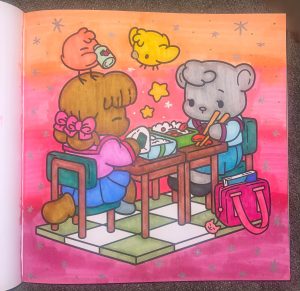
There are many benefits to colouring, such as promoting mindfulness, relieving physical and mental stress, and learning to embrace the imperfect. When our lives are designed to keep us switched on all the time, it can be difficult to accept the fact that not every moment needs to be a productive one. Activities like colouring, drawing, and doing puzzles are great ways to keep your mind present and your hands busy as you fill the time you would normally spend aimlessly scrolling.
If you want to know more about the benefits of colouring, read this.
Another great way to declutter your mind is journalling. Not only does journalling have significant benefits for mental health and clarity, but it is also proven to have physical benefits too, such as lowering your blood pressure and improved liver and lung function. Journalling can also result in less time spent in hospital, reduced stress-related visits to the doctor, less time out of work following job loss, and even higher student grade averages. With all those benefits, why wouldn’t you want to keep a journal?!
If the idea of practicing mindfulness is of interest, may I draw your attention to two fantastic resources?
When you’re feeling very overwhelmed and need immediate grounding: Leaves on a Stream Exercise.
If you want to incorporate mindfulness practices into your classroom, here is a thorough and accessible resource from Illawara Shoalhaven School – Link Program.
Step Three:
Consistently reminding yourself of who you are is a great incentive to keep trying new things that will declutter your brain. Consider your values, your goals, and the qualities that you take pride in. How can you realistically return to who you are at your core?
In my case, I thought about my family and friends who weren’t getting the best version of me. I thought about my love for reading, my creative nature that was being ignored outside of work, and the importance I place on health and movement.
So, if those things are important to me, what am I doing to fulfil those needs? I can’t say that I am an avid reader if I don’t pick up a book. I can’t say that I love my family and friends if I don’t show them that I do. I can’t complain that I feel weak or sluggish if I made a conscious choice to ignore the privilege of moving my body.
Take a moment to think deeply about what you want from your day-to-day life. Identify the hypocrisies and make changes accordingly. Be realistic and honest, and I promise you will not only feel the weight of the mental load you carry lift, but you will also start to feel like yourself again.
Step Four:
Make a plan and stick to it. All these ideas are great in theory, but unless you create time in your schedule or make active changes to your routine, you won’t do them.
Start by listing your intentions. Then, think of the best time in your day to act. I was surprised at how easy it was to act once I had actually scheduled everything in. Here’s an example of what my schedule looks like.

Don’t forget – life happens. You must be flexible, but if you are trying every day to do better, you will be better. Once the wheels are in motion and you realise the difference these changes make to your mental health and day-to-day life, you won’t want to stop.
As with all habits, they take time to become second nature. Don’t be too hard on yourself if life gets in the way and always remember that you will get what you put in eventually.
